










The surface finish of plastic components actually has two layers: one is determined during molding by the surface condition of the mold cavity, and the other consists of spray painting, electroplating, laser engraving and silk-screen printing applied after molding. This article explains the applicable scenarios for each method, their impact on dimensions and assembly, and the three things that need to be clearly specified when requesting a quote.
Surface finish actually has two layers
The first layer is the surface of the plastic part itself, determined by the surface condition of the mold cavity: the brighter the cavity is polished, the brighter the molded surface will be; with etching or EDM texture, the molded surface comes out matte or textured. This type of effect is produced directly during molding, requires no additional process, and does not change the fit dimensions.
The second layer is post-processing after molding: painting, electroplating, laser engraving, and screen printing. The two layers can be combined, for example a matte base with a screen-printed logo on top. Once these two layers are clearly distinguished, you can tell during discussions whether a given requirement calls for modifying the mold or adding a post-processing step.
Painting and soft-touch oil
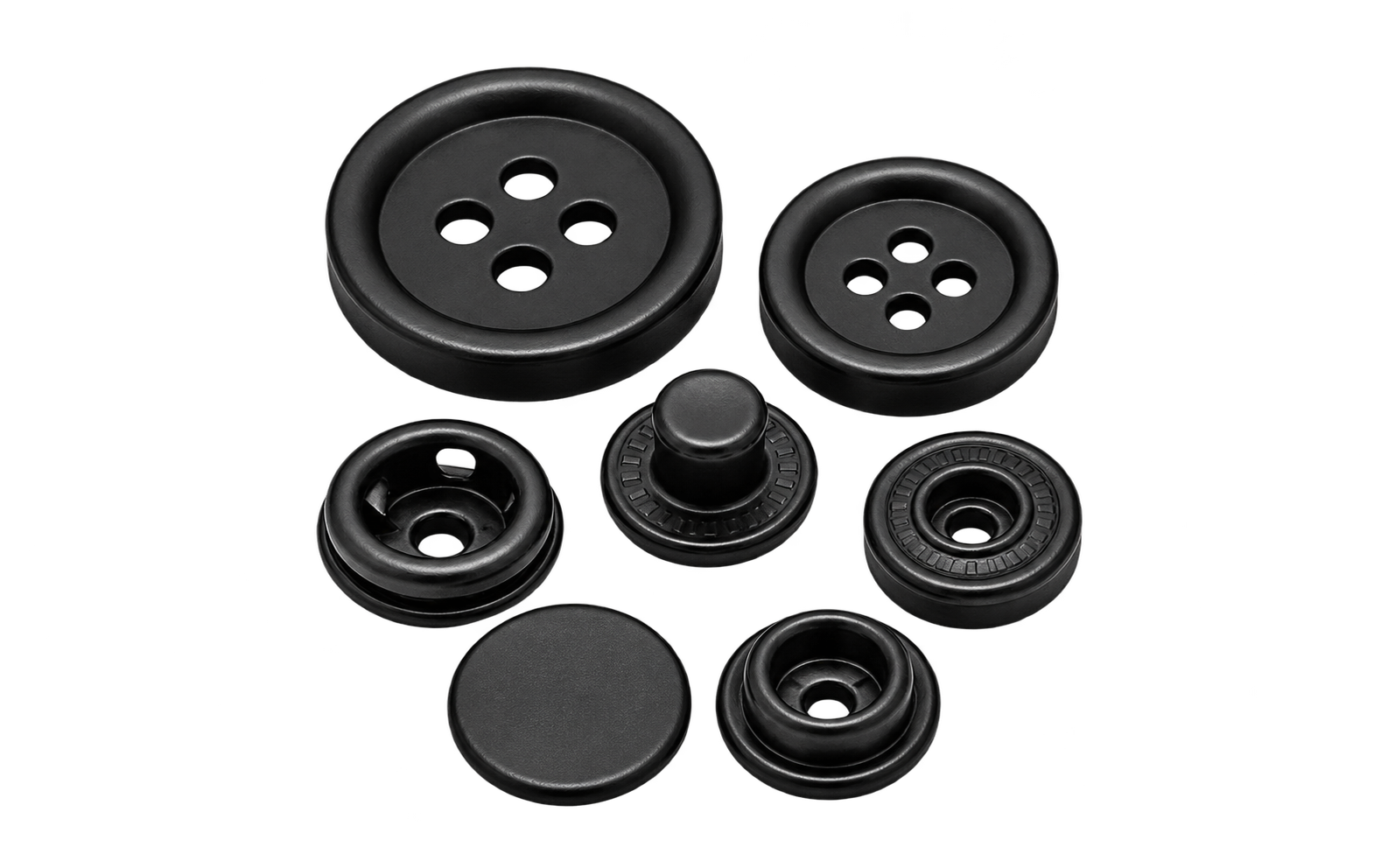
Painting is spraying a layer of coating onto the surface of the plastic part. There are three common purposes: unifying color and gloss, covering minor color differences and flow marks, and creating a special feel, such as rubber paint or soft-touch oil. For small parts such as buttons and zipper cords, painting is a common way to achieve a consistent color across the whole batch.
Two points are easily overlooked. First, the coating has thickness and will slightly change the outer profile and hole positions, so tight-fit structures should be evaluated in advance based on the dimensions after painting. Second, the wear resistance and solvent resistance of the coating need to be confirmed by testing, and adhesion is usually verified by methods such as cross-hatch and rubbing. For color and gloss as well, it is advisable to keep physical samples on file.
Electroplating: common for appearance parts, but plan ahead
Electroplating of plastic parts commonly falls into two categories: water-based electroplating and vacuum coating, and the goal is usually to achieve a metallic look. Its limitations are fairly clear: there are requirements on the substrate, most commonly ABS and its modified materials; the coating changes dimensions, so fit clearances must be evaluated based on the post-plating dimensions; and plated parts are generally not suitable for areas that require frequent deformation, because the coating's ability to withstand deformation is limited.
Brightness, color difference, and coating adhesion all need to be confirmed during the sampling stage. If a product has both assembly requirements and metallic appearance requirements, it is advisable to evaluate these two things together during the structural design stage, rather than waiting until the appearance is finalized before changing the structure.
Laser engraving and silk screen printing: two ways to apply markings
Laser engraving uses a laser to burn a pattern into the surface. Its advantages are wear resistance and a low tendency to peel off, making it suitable for fine lines and single-color markings; its limitation is that the color usually can only vary in light and dark shades, and free color registration is not possible.
Screen printing uses a mesh stencil to transfer ink onto the surface. It can produce multiple colors at relatively low cost, and is suitable for flat or nearly flat areas; durability depends on the ink and the curing method, and the print is relatively easy to scratch off or remove with solvents.
The choice can be reduced to one sentence: for wear resistance in a single color, use laser engraving; for multiple colors on a flat area, use screen printing. Parts such as apparel labels that need multi-color graphics mostly use screen printing, while brand logos that must withstand long-term wear are better suited to laser engraving. For markings on curved or raised areas, both methods should be sampled first to confirm the actual result.
Three things to specify when making a request
First, location and function: which surface the marking goes on, whether it is a visible surface, and whether it will be frequently rubbed or exposed to solvents.
Second, references: for color, gloss, and feel, it is best to provide a physical reference. Giving only a color code or saying "make it a bit brighter" makes alignment very difficult.
Third, testing requirements: abrasion resistance, alcohol resistance, sweat resistance, and adhesion — under what conditions they are tested and what level is considered acceptable. Only when these three things are written into the inquiry materials can the supplier provide an executable plan and cost.
Frequently Asked Questions
Can matte and gloss finishes be applied to the same product?
Yes. A common approach is to treat the mold in zones, with one part highly polished and another part textured; alternatively, the part can be molded as a whole and then spot-sprayed. The former adds no post-processing steps but places higher demands on mold machining; the latter is more flexible but involves a coating. The zone boundaries and transition effects need to be confirmed through sampling.
Will electroplating affect assembly?
Yes. The plating has thickness, which typically shows up as a slight increase in the outer profile and a slight reduction in hole positions. If the assembly clearance is already very tight, the part may not fit after plating. Therefore, for parts involving electroplating, the mating dimensions must be evaluated based on the post-plating state, and actual verification with matching parts installed must be carried out during the sampling stage.
Will a silk-screen printed LOGO come off after long use?
It depends on the ink, the curing method, and the actual friction conditions. In areas subject to frequent friction or frequent contact with alcohol or sweat, silk-screen printing is relatively prone to wear. For such cases, you can evaluate switching to laser engraving, or adding a protective treatment after silk-screen printing, with the final decision based on test results.