












The material field of the same cord lock listing "PA/POM/PP/TPU" does not mean these materials perform similarly and can be freely substituted. It is more like a selection table waiting to be filled in: once the structure is fixed, the material still needs to be evaluated based on where it is installed, how thick the cord it pairs with is, how much force it bears, what it contacts, and the hot/cold and sunlight conditions of the environment. Purchasing should state the conditions clearly so that recommendations have a basis.
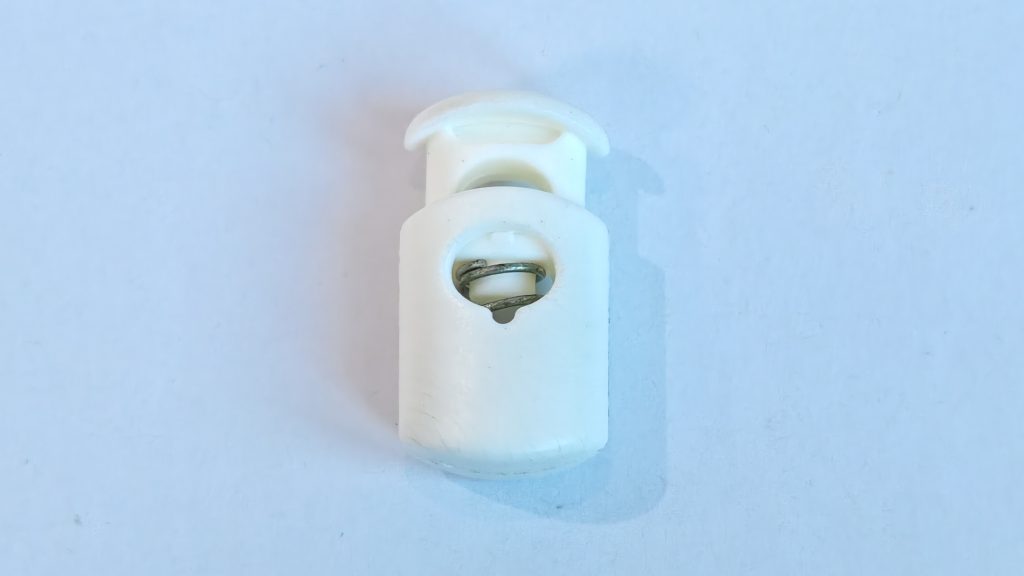
Same cord lock, fixed structure — why are material options still offered?
For the same cord lock, once the body profile, press head, side openings and spring assembly positions are fixed, changing the material may still leave the appearance similar, so customers viewing the product images can easily assume the material does not matter either. However, the product documentation for both cord locks states the material options as PA/POM/PP/TPU and that "material selection can be evaluated according to structural and usage requirements"; this treats material as an option to be decided together with the usage conditions, rather than a commitment that several materials perform equivalently or can be substituted for one another.
Material selection itself requires many conditions. The general approach to selecting engineering plastics is: first understand whether the use is static or dynamic, the form and magnitude of the applied load, the service temperature and duration, the chemicals contacted, whether the part is exposed to external factors such as ultraviolet light, and the shape of the component. This information cannot be obtained from a product image alone, so keeping multiple material options essentially defers the material decision until the requirements are clear.
Purchasing should first specify the usage conditions; only then do material recommendations become meaningful
When requesting a quote, explaining the application scenario clearly is more useful than first asking "which material to use": whether the cord lock is fitted on a jacket hood drawcord or hem drawcord, or on the cord runs of bags and storage pouches; whether the drawcord is for static stowage or frequent pulling and adjustment; whether repeated pressing and returning is required; how thick the cord is and what the cord cross-section shape is; whether it is exposed to long-term sunlight, and whether it contacts sweat or cleaning agents; and what preferences there are for appearance, hand feel and color. These conditions determine the direction for evaluating materials and structures.
The actual performance of a cord lock also depends on cord diameter, hole opening fit, travel distance and the connection point. The product documentation makes clear that these fits must be evaluated per project and confirmed with drawings and samples. Material is only one part of it; by providing the cord information together with the installation position, the supplier can judge whether the hole opening clearance, button direction and operating space are suitable.
Features often mentioned about POM, and what cannot be inferred from them
Among multiple options, POM is one that is often mentioned. Public material documentation shows that POM (polyoxymethylene, also called acetal) is a partially crystalline thermoplastic with relatively high mechanical strength and stiffness, good sliding properties, wear resistance and low moisture absorption, and, owing to its good dimensional stability, is suitable for parts requiring sliding, wear resistance or high dimensional stability; typical applications include sliding parts such as bushings, rollers and slide rails, as well as components related to water and food, pharmaceuticals and drinking water. Buyers can use this to understand why some cord locks consider the POM direction.
However, the features of a material category cannot be applied directly to a particular cord lock. The existing cord lock documentation only states that materials can be evaluated among PA/POM/PP/TPU according to structure and usage requirements; it does not state which material a particular cord lock actually uses, nor does it provide strength, wear or service life data for that cord lock. Seeing an introduction to POM can only be understood as one evaluation direction; it cannot be concluded that a particular cord lock is made of POM, and still less can its adjustment holding force or service life be inferred.
Boundary statement
This article discusses how to understand cord lock material options and how to communicate during inquiries. It does not cover specific formulations, process parameters, or mold designs, nor does it make any determination about the actual material and performance of any particular cord lock. The actual installation and use performance of cord locks are subject to the confirmed samples; material recommendations must be evaluated by the supplier based on the conditions of use, and where regulatory requirements such as food contact or medical applications are involved, these must be separately confirmed with the corresponding compliance documentation.
Frequently Asked Questions
Why can't conclusions about PA, PP, and TPU be drawn from the abbreviations alone?
No. Material abbreviations only indicate the broad category; the specific grade, modification status, and suitability for this cord lock must be confirmed with the supplier. The available information does not provide a specific performance comparison of PA, PP, and TPU in cord locks, and the actual performance of a cord lock also depends on cord diameter, hole opening fit, press stroke, return structure, and the specific conditions of use. Procurement should not directly specify a material based on general impressions, but should instead provide the conditions of use to the supplier for evaluation and use samples to confirm the press feel, hole opening alignment, return, and actual cord adjustment performance.
How can "material to be confirmed" be turned into questions that can be answered during an inquiry?
Break material questions down into conditions-of-use questions so the supplier can answer specifically. These can first be organized under the following items: where it is installed (hood cord, hem, bag opening, luggage cord route); what cord diameter it matches and the cord cross-sectional shape; how much force the drawcord is subjected to and whether it is adjusted frequently; what it contacts (sweat, rain, cleaning agents, sunlight); the hot and cold range of the use environment; appearance, feel, and color preferences; estimated quantity and delivery date. Provide these together with product photos, drawings, and dimensions so the supplier can evaluate whether the hole opening clearance, press head direction, and operating space match.
At the same time, suppliers can be asked to explain two points: what the basis is for recommending a certain material, and by what method they plan to verify it. The verification approach given in the cord-lock documentation is to check, during sampling, the travel range of movement, alignment of the openings, resetting, and the actual adjustment performance of the cord, with the confirmed sample as the reference; tool-type documentation on material selection also reminds that tool results are for reference only and cannot replace actual testing. Procurement can include "please provide samples for confirmation" in the RFQ requirements, rather than stopping at the material name alone.