











In a drawcord system, the flip-lid clip fitted at the cord end and the adjuster positioned mid-run on the cord serve different purposes. This article explains how the flip-lid clip wraps the cord end, how the adjuster sets cord length, and what cord-end information to provide when requesting a quote, so as to reduce back-and-forth sampling.
The cord-end flip-lid clip solves the problem at the cord tail
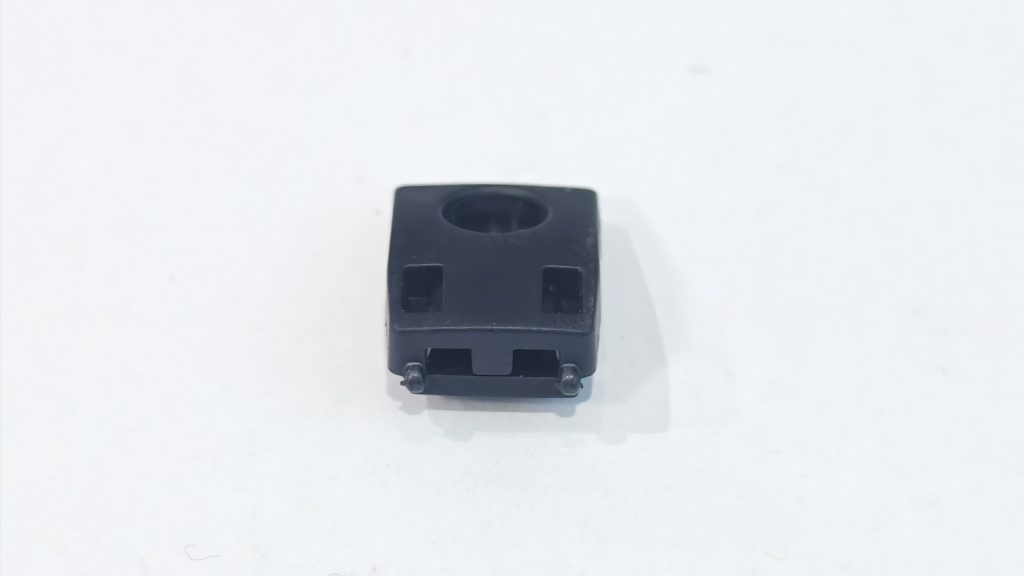
If the two ends of a drawcord are left untreated, problems such as frayed edges, cord tips retracting into the channel, and the inability to grip them with the fingers easily occur. The structure of the cord-end flip-lid clip is as follows: one end of the clip body has an opening, and the other end is the flip-lid fastening portion; when the lid is opened, the internal receiving area and transverse texture are visible. Place a suitable cord end or cord tape into the receiving area, and close the lid to form a wrapping and gripping portion; the cord tail is gathered in one place and is also easier for fingers to grasp.
It is important to distinguish what it does not do: the flip-lid clip is fitted at the cord end, and its object of action is the cord end itself; it does not perform the function of sliding along the cord body to adjust cord length. When the drawcord truly needs to be shortened or lengthened at any time, the adjustment action is performed by the cord lock positioned mid-run on the cord.
Adjustment buckles and end buckles are two different roles
The typical structure of a drawstring adjustment buckle is a buckle body with cord passage holes, housing a spring and a movable press head. Pressing the press head aligns the cord passage, then the cord is pulled to adjust the length; when released, the position is held by the return fit. It sits at the middle section of the cord, the cord passes through the holes, and it stops at the required position by clamping force.
The flip-lid clip buckle, by contrast, is fixed at the end of the cord. If both ends of a cord need finishing, two end buckles are required; adjustment buckles are counted separately according to their routing position. When the two work together on one cord, the end buckle determines the appearance and grip feel of the cord tail, while the adjustment buckle determines whether the user can adjust the cord length themselves. When requesting a quote, the quantities should be quoted separately and the two must not be mixed as one type of accessory.
Materials are evaluated according to structure and use scenario
Both types can be evaluated in materials such as PA, POM, PP, and TPU; the specific material selection must take into account the structure, the way force is applied at the flip-lid connection, and the use environment. The flip-lid clip buckle has hinged and snap-fit parts, while the adjustment buckle has a movable press head working with a spring, so material evaluation cannot be done separately from the structure. Actual feel, clamping, and holding performance are subject to the confirmed sample; before mass production, assembly confirmation with the actual cord is recommended.
Boundary statement
This document explains the division of functions between cord-end flip-lid clips and drawstring adjustment buckles and the key points for requesting a quote; it does not cover performance commitments such as pull-off force or durability cycles for specific fasteners. Different cord materials, cord diameters, and usage environments will affect the fit. Where load-bearing or safety-related applications are involved, each project must be evaluated separately and confirmed with the supplier.
Frequently Asked Questions
Before matching, count the cord ends and routing first
First count per individual product: how many ends of each drawstring need to be covered, which section the adjustment buckle is installed on, and whether the cord passes through once or loops back. Single-end finishing, double-end finishing, and loop-back designs correspond to different numbers of end clips and hole-entry directions, and for two-hole adjustment buckles the routing direction of each hole must also be confirmed. These points must be clearly marked on the drawing or sample before discussing quantity and unit price.
For a quote, these items are enough to start the evaluation
Provide the cord diameter or cord cross-sectional shape, the number of cord ends, the dimensional requirements for the receiving groove or hole opening, and color and marking requirements; if a cord sample is available, sending a physical piece is the most direct approach. The internal texture and specially shaped opening of the flip-lid clip need to match the cord-end cross-section, and the hole diameter of the adjustment buckle must also match the actual cord body. Text descriptions alone are prone to deviation, so confirming the fit with a cord sample is recommended.