









When sourcing plastic parts, color, surface feel, and markings are often three things confirmed separately. First clarify which process path achieves each effect, then break the requirements down and write them into the RFQ so that suppliers can respond to each one separately, rather than giving a vague "we can do it."
First, distinguish the three: color, surface texture, and markings are three different paths
The "appearance" of a plastic part is usually a superposition of three elements: color (the material itself is colored, or an additional coating is applied to the surface), surface texture (glossy, matte, textured, etc., mostly coming from the mold surface or post-processing), and markings (logo, model number, serial number, etc., mostly coming from printing or engraving). These three are confirmed in different ways and are priced differently, so describing them all in one sentence easily leads to back-and-forth rework.
The most practical approach for buyers is to split the requirement into three lines when requesting a quote: what color is needed, what surface texture is needed, and whether any content needs to be printed or engraved on it. This way the supplier can separately determine which aspects are solved by the material, which are mold-related, and which belong to downstream processes.
Where color comes from: masterbatch coloring and surface coating
The most common method is to add a coloring component to the plastic raw material, i.e., products such as masterbatch (color masterbatch, concentrated colorant), so that the molded plastic part is colored throughout. Public information from masterbatch suppliers describes such products as concentrates used for coloring plastics, bringing the material to the target shade by adjusting the dosage. The significance for purchasing customers is that the color is determined at the material stage, and no additional coloring process is needed afterward.
Another route is surface coating: forming color or a special appearance on the surface of an already molded plastic part. Taking polycarbonate and its blends as an example, public information describes a direct coating process that combines injection molding and reaction injection molding in the same mold to form a polyurethane coating on the surface of the plastic part, enabling color and small-batch diversification while reducing dependence on conventional painting lines. With this route, the color is on the surface, not inside the material; whether other materials can use the same type of surface coating must be confirmed with the supplier.
The two paths affect quoting differently: masterbatch coloring is usually confirmed together with material and color, whereas surface coating involves additional processes and appearance acceptance. Whichever path applies, the buyer should provide a color code or color sample and confirm the acceptable color tolerance range with the supplier. In public information on masterbatch for high-temperature sulfone resins, color varies with the color formulation and part thickness; whether other materials behave the same way should be based on the supplier's explanation for the specific project.
Where surface texture comes from: mold texture and post-processing
Appearances such as glossy, matte, leather grain or fine grain are mostly the mold surface being replicated onto the plastic part. Public information describes mold texture as applying a standard texture to the mold, thereby highly customizing the finished surface; that is, changing the mold surface treatment for the same plastic part design will noticeably change the finished appearance.
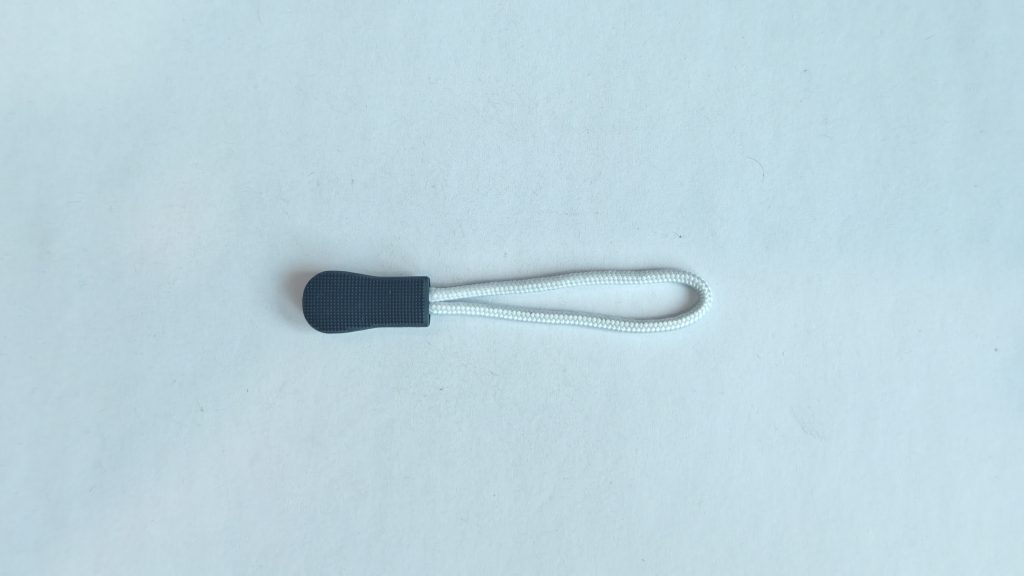
A specific example visible on the product is the grip of a zipper pull cord: its surface carries dense fine grain, forming a textured area that is easy for fingers to contact, and such fine grain can be created through mold texture. This shows that texture is both a visual requirement and possibly a tactile requirement, so when requesting a quote you should state which aspect matters more to you.
Material and texture combinations affect each other. Public information notes that filled materials or materials with a pronounced shrinkage tendency may cause grain differences on the surface, affecting the distinguishability between different textures; textured surfaces also generally depend more on draft angle than glossy surfaces. These are conditions at the mold and structure level; the buyer does not need to design them, but should confirm appearance with samples during the sampling stage rather than relying only on text descriptions.
Breaking requirements down into separate items: why it saves effort
Material, color, and surface effect are not the same thing: masterbatch mainly handles coloring, mold texture or post-processing determines surface feel, and printing or engraving handles identification. The corresponding confirmation actions for these three are color sample approval, sample part appearance approval, and marking proof approval. Writing them all into one sentence like "appearance per drawing" leaves suppliers guessing your priorities, and quotes easily miss items.
It should be noted that this article only covers source classification and inquiry key points at the general concept level, and does not involve specific formulations, process parameters, or mold design details; the acceptable range for specific color differences, texture sample numbers, and marking durability requirements need to be confirmed per project and supplier with sample parts.
Frequently Asked Questions
Marking is another type of requirement: pad printing and laser engraving
The marking method should be selected according to the nature of the content: graphic-type markings (such as logos and two-dimensional patterns) commonly use pad printing, transferring a two-dimensional pattern onto the surface of a three-dimensional object; information such as serial numbers and part numbers commonly uses laser engraving, which can be engraved on the mold or directly on the part.
What should be provided when requesting a quote? The inputs listed in publicly available materials include: artwork files and graphic dimensions, the position of the marking on the part (annotated in the drawing or 3D model), color requirements (such as color codes), quantity, and part material. Pad printing has a printable range for pattern size, color, and complexity; the coarser the surface texture, the more limited the printability, so if the marking position falls on a textured surface, this must be stated in advance. Laser engraving is not suitable for all materials; publicly available materials mention that acetal-based and high-temperature materials are not suitable, and the specific case is subject to the supplier's confirmation based on your material.
What information is recommended to prepare before requesting a quote?
It is recommended to prepare four types of information: color (color code or physical color sample, as well as the acceptable color difference range), surface (specify glossy/matte, or provide a specific texture sample and reference position), marking (artwork, position, size, color), and service conditions (material preference, operating environment, batch size). Images can only illustrate the appearance of plastic parts and cannot be used to infer that a specific model necessarily uses a certain material or a certain color process.
The relationship between color and material should be explained separately. Taking the rectangular buckle as an example, the material direction given in the product information is thermoplastic materials such as POM / PA, and color and surface effects can be customized according to the project; the actual material selection and appearance are subject to confirmation by samples and matching requirements. In other words, material determines strength, rigidity, adaptability to the operating environment, etc., and does not directly equal a certain color; only when material requirements and color requirements are raised separately can the supplier respond effectively.