












For drawstrings on hood cords, hems, and bag openings, should the cord lock be fixed to the fabric, or should the cord pass through the lock body? This article uses the two structures — base-plate mount and threaded-cord — to explain how the fastening method, cord routing direction, and operating space affect selection, helping buyers state their requirements clearly when requesting quotations.
What is the difference between the two structures
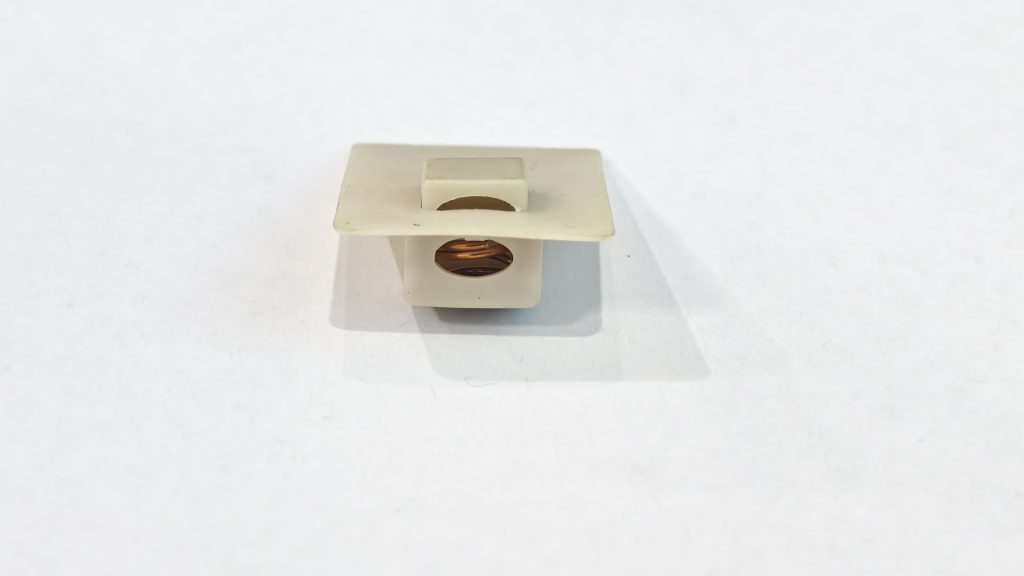
The core function of a cord lock is to manage and adjust cord length, but the fastening methods fall into two categories. The base plate version has a mounting base plate in addition to the lock body; the fastening method of the base plate is evaluated according to the fabric or bag structure, so that the cord passage area stays in the designed position; round and rectangular base plates belong to this category, and the base plate can also be provided with additional holes for fastening.
The cord-threading version has no base plate that needs to be fastened to the fabric; the lock body itself has cord-threading holes, the cord passes directly through the holes, and adjustment is clamped by the press-and-return action. Dual-hole structures with two cords and loop-back routing schemes are designed per project, and the cord path through each hole must be confirmed separately.
Where are the hood cord, bag opening, and bag fastened
The deciding factor is whether the cord lock needs to be fixed to the fabric. For garment areas such as hood cords and hems, if the cord lock body is to stay stable at a certain position and not slide along the cord, it is suitable to evaluate the base-plate version: once the base plate is fixed, the cord lock body and the cord passage position remain stable. The base-plate version can be evaluated for jacket drawcords, bag closures, and other areas that require the cord lock position to be fixed; the base plate, the fabric, the cord path, and the operating space of the cord lock body must be confirmed together.
If the cord path itself needs to move, be adjusted separately at both ends, or be routed back through a closure, the threaded-cord version is more suitable for evaluation. This type of structure is used for organizing and adjusting drawcord length, and can be evaluated for matching jacket hood cords, hem drawcords, and cord paths on bags and storage pouches; for two-hole or double-end structures, confirm the cord routing through each hole first.
Bag closures can usually involve either type: for a lock fixed at a single point on the bag body, consider the base-plate version; for one threaded along the cord path at the bag opening and required to move with the closure, consider the threaded-cord version. In either case, the cord path direction at the bag opening and the operating space of the cord lock body must be designed together; do not look only at the appearance of the cord lock body.
What to consider in advance regarding appearance and operation
Operating space is an often overlooked item. The base-plate version fixes the cord lock body to the fabric, so the pressing direction, finger reach range, and surrounding stitching all affect use; with the threaded-cord version, the cord lock body can move along the cord, but it may shift when pressed, so the adjustment feel needs to be verified against actual use conditions.
In terms of appearance, the base-plate version offers shape options such as round and rectangular; the outer edge of the base plate, the fixing holes and the cord-routing direction can be adjusted per project. For the cord-threaded version, the scheme can be adjusted around the hole spacing and the button-head shape. Color, surface effect and marking are all within the customizable scope, subject to confirmation by drawings and samples.
Materials are described only by their common characteristics.
Both the base-plate version and the cord-threaded version can be evaluated for materials such as PA, POM, PP and TPU per project; material selection must take into account the structure and usage requirements, and is subject to drawings and samples. The product images in this document show the structural form and do not mean that this model has been confirmed to use a particular material.
Comparison between the base-plate version and the cord-threaded version
-
Base-plate version
With a mounting base plate, it is secured according to the fabric or bag structure to keep the cord-passing area in the designed position; suitable for cap cords, bag openings, and bag areas that require a fixed buckle position.
-
Cord-threading version
The buckle body has cord-threading holes; the cord passes directly through and is adjusted by pressing and resetting; suitable for hems, cap cords, and bag openings where the cord path needs to move, be double-ended, or be threaded back.
-
Selection basis
First check whether the buckle position needs to be fixed to the fabric, then confirm the cord diameter, single-hole or double-hole routing, base plate hole positions, and pressing operation space.
Frequently Asked Questions
How do I choose between the base-plate version and the cord-threading version based on installation position?
First, check whether the buckle position needs to be fixed to the fabric: if fixation is required, evaluate the base-plate version first; if it needs to run along the cord path or move, evaluate the cord-threading version first. The value of the base-plate version lies in keeping the cord-threading point at the designed position; the trade-off is that the base-plate dimensions, fixation position, hole positions, and installation method must all be evaluated per project, and the fabric type and thickness will affect the fixation solution.
The constraints of the cord-threading version lie in the cord itself: the cord diameter, hole-opening fit, and adjustment operation need to be confirmed against the physical item, and the routing method for the double-hole structure must also be determined in advance. The base-plate version likewise requires confirmation of the cord diameter and hole-opening fit. The final performance of both structures is subject to the confirmed sample; it is recommended to use the actual cord during the sampling stage to check adjustment and retention performance.
What information should be prepared before requesting a quote?
It is recommended to provide at one time the installation position, fabric type and thickness, cord diameter, single-hole or double-hole routing, base-plate fixation hole position requirements, operating space, color, and sample confirmation requirements. This information determines whether a base plate is needed, the base-plate shape, and the hole-opening fit direction; missing any one item may cause the quote to lean toward a generic solution.
If reference samples or drawings are available, they can be provided together; DAWEI supports evaluation, sampling, and bulk supply based on drawings and samples, with dimensions, colors, markings, and structures customizable per project; actual installation and performance are subject to the confirmed samples.