











Polypropylene (PP) is a common lightweight plastic used in protective gear shells and small plastic accessory parts. Aimed at purchasing customers, this article explains the basic material characteristics of PP, its role in knee pad shells and small parts such as buckles and zip ties, and the environmental and compliance conditions that need to be confirmed before requesting a quote.
What material is PP?
Polypropylene (PP) is a semi-crystalline thermoplastic made by the catalytic polymerization of propylene, and it belongs to the polyolefin family of materials. For purchasing customers, the first thing to understand is that PP is one of the most widely used general-purpose plastics, found in both structural parts and small accessory parts, with a relatively broad choice of grades and suppliers.
Common characteristics of PP include good chemical resistance, relatively high purity, very low water absorption, and electrical insulation. Regarding density, a distinction must be made: un reinforced, unmodified general-purpose PP typically has a density below 1 g/cm³, making it light in weight per unit volume; whereas filled or modified PP may have a noticeably higher density, for example, one food-contact modified PP grade is specified with a density of 1.42 g/cm³. Therefore, density cannot be judged from the name "PP" alone. In addition, PP has limited toughness in sub-zero temperature ranges, and this point is especially critical for protective gear shells that may be used in outdoor scenarios.
In what forms does PP appear on procurement lists?
PP can be processed into injection-molded parts, or made into semi-finished products such as extruded rods, sheets, and tubes, which are then machined into finished parts. In other words, what you receive at procurement may be injection-molded structural components (such as protective gear shells), or profiles that require secondary machining.
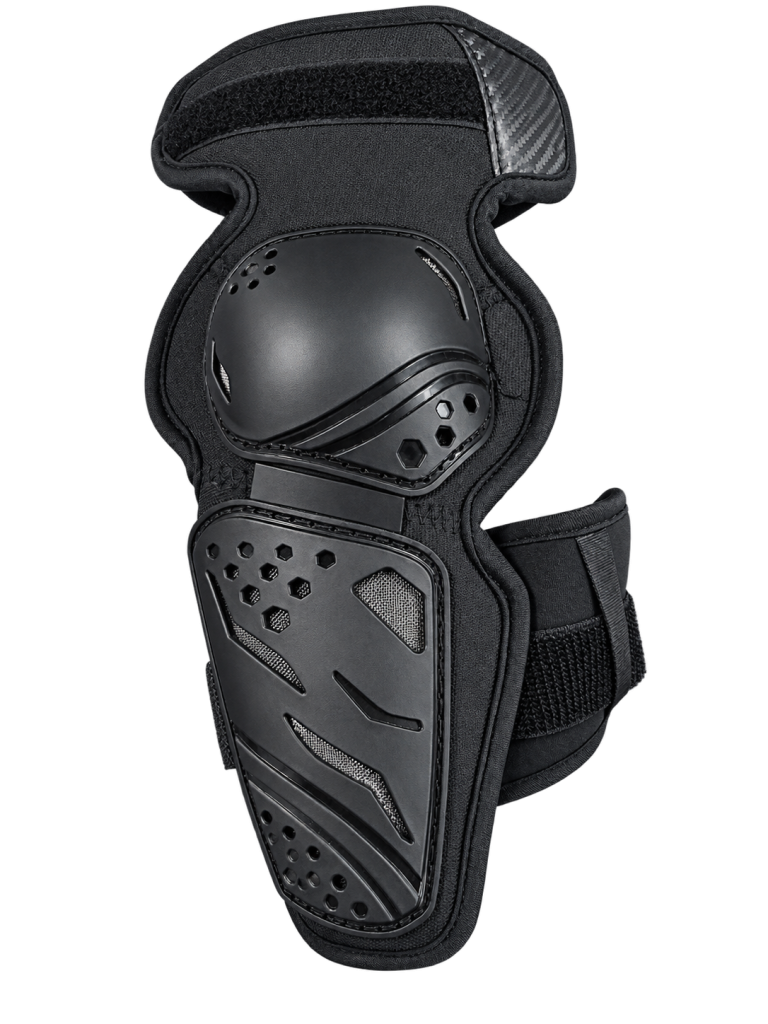
Protective gear shells such as knee pads are injection-molded structural components: the shell is injection-molded, formed as a single integrated structure with stable dimensions, and its size, color, material, and structure can be customized according to drawings or samples. PP is one of the available shell material options; the knee pad product page lists shell materials as plastic options including PP, PE, and TPU, selectable according to protection level and feel.
Frequently Asked Questions
What is the role of PP in protective gear shells?
In protective gear shells, PP is typically positioned as a lighter, chemical-resistant plastic option, but impact resistance and low-temperature toughness must be confirmed according to the specific protection level, grade, and sample parts; conclusions cannot be drawn from the material name alone. The knee pad product page lists PP alongside PE and TPU as shell material options, indicating that PP is only one of the available options, and whether it is suitable must be confirmed according to the specific protective gear project.
The practical considerations when selecting a material are: if the protective gear is mainly used in normal-temperature environments and lightweight properties and chemical resistance are valued, PP provides a suitable basis; if the service environment is colder or impact absorption requirements are high, it is necessary to confirm with the supplier the low-temperature performance of the selected grade and to rely on sample-part verification. PP has limited toughness in sub-zero temperature ranges; this is a note at the material-property level and does not represent the actual performance of any specific protective gear.
Small plastic accessory parts such as buckles, cable ties, and closures
Some PP injection-molded parts are used in small accessory parts such as buckles, cable ties, and closures, but for food-contact scenarios it should be confirmed whether the specific grade has a food-contact compliance statement for the target market; compliance cannot be assumed merely from the name "PP". Food contact is a matter of grade and certification, and the supplier needs to provide the corresponding statement.
For example, PP modified materials developed specifically for foreign-object detection needs in the food industry exist on the market, with a blue appearance for easy identification, and can be assessed under FDA and EU 10/2011 food-contact regulations for parts requiring food safety such as cable ties, buckles, and closures. The performance and compliance information of such materials should be based on their data sheets and cannot be extended to all PP parts.
What conditions should be confirmed before requesting a quote?
Before requesting a quote, clearly state the operating environment and temperature, the low-temperature impact and toughness requirements, the color and appearance requirements, food-contact or other compliance requirements, and how the part mounts and fits with fabric and other components. These conditions determine the material direction and grade selection, and they also affect whether quotes from different suppliers can be compared directly.
Even when both are PP, general-purpose grades and modified grades can differ greatly in density, strength, temperature resistance and compliance status; using a generic name instead of a grade designation will cause the quote to mismatch the actual product. When requesting a quote, we recommend providing product photos, drawings, dimensions and quantity requirements so the supplier can evaluate the project. Specific performance and compliance status are subject to the corresponding grade datasheet and samples.